
Cost vs Safety: Are Crash Barriers Worth the Investment?
In infrastructure and industrial safety planning, the discussion around Crash Barriers rarely begins with pricing alone.
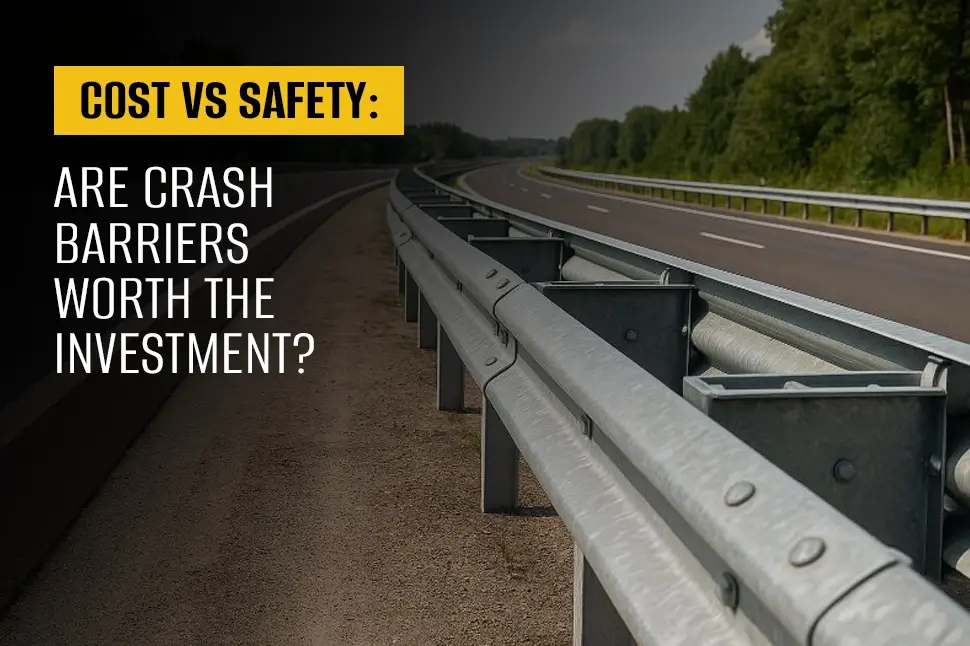
In infrastructure and industrial safety planning, the discussion around Crash Barriers rarely begins with pricing alone. Most procurement teams, contractors, and project consultants eventually reach a more practical question: what is the long-term cost of not installing the right protection system?
That shift in thinking is important because crash barriers are not merely fabricated steel sections placed along highways or industrial zones. Their role is tied directly to vehicle impact absorption, traffic control, structural protection, and human safety.
Across India, especially in expanding transport corridors and industrial developments, buyers are increasingly evaluating crash barriers through a lifecycle-value lens rather than a one-time procurement exercise. This is why pricing discussions in search results are often factor-driven rather than fixed-rate based. Specifications, coating standards, installation conditions, and project scale significantly influence cost structures.
For manufacturers and suppliers such as Ventura Salasar, quotation discussions generally involve engineering variables, logistics planning, and compliance expectations instead of standard retail-style pricing.
Industrial Pricing Overview
The market for crash barriers follows a specification-sensitive pricing model.
Unlike commodity steel products, crash barrier systems are usually quoted based on:
- barrier type
- steel thickness
- galvanization requirements
- highway authority standards
- project length
- fabrication complexity
- transportation distance
- installation environment
This is one reason why most organic search results around crash barriers lean toward educational-commercial content rather than fixed catalog pricing.
In real-world infrastructure projects, even two visually similar barriers may differ substantially in cost because of:
- impact resistance requirements
- corrosion protection standards
- anchoring systems
- testing certifications
- terrain conditions
For buyers, understanding these variables helps reduce quotation confusion during supplier comparisons.
Key Factors Influencing Pricing
Several industrial and manufacturing variables influence the final quotation of crash barriers.
1. Steel Grade and Raw Material Volatility
Steel remains the primary cost component.
Changes in:
- hot rolled coil pricing
- zinc availability
- alloy composition
- import dependencies
can directly affect fabrication costs.
In periods of industrial demand fluctuation, raw material pricing may shift faster than procurement cycles, creating noticeable quotation differences between suppliers.
2. Barrier Design Configuration
Different configurations require different production setups.
Examples include:
- W-beam systems
- thrie-beam barriers
- median barriers
- bridge safety barriers
- industrial perimeter impact barriers
Each design changes material consumption and fabrication complexity.
3. Thickness and Structural Strength
Higher thickness generally improves durability and impact resistance, but it also increases:
- material consumption
- rolling complexity
- welding requirements
- freight weight
Projects with higher-speed traffic zones typically require stronger systems.
4. Galvanization and Surface Protection
Corrosion resistance plays a major role in lifecycle performance.
Hot-dip galvanization often increases upfront cost, but it may significantly reduce:
- maintenance frequency
- rust-related replacements
- long-term structural degradation
This becomes especially relevant for coastal regions and high-moisture industrial environments.
5. Compliance and Testing Standards
Certified products often involve:
- testing expenses
- documentation processes
- inspection protocols
- quality assurance systems
While these add to manufacturing cost, they also improve project reliability and regulatory acceptance.
6. Tooling and Production Setup
Short production runs usually carry higher per-unit costs.
Why?
Because tooling setup, machine calibration, and fabrication preparation remain relatively fixed regardless of batch size.
Large infrastructure projects typically benefit from better production efficiency.
7. Fabrication Complexity
Additional operations such as:
- punching
- slotting
- custom drilling
- reinforced joints
- curved sections
can increase labor and production time.
8. Installation Environment
Projects involving:
- hilly terrain
- bridge edges
- industrial loading zones
- uneven road shoulders
may require specialized structural adaptations.
9. Freight and Logistics
Crash barriers are bulky fabricated products.
Transportation costs depend on:
- route accessibility
- delivery distance
- vehicle load optimization
- unloading infrastructure
Manufacturers operating from major industrial regions like New Delhi often coordinate Pan-India dispatch planning to improve freight efficiency.
10. Project Timeline Urgency
Expedited production schedules may involve:
- overtime shifts
- priority fabrication
- faster procurement cycles
- dedicated logistics arrangements
These operational adjustments influence pricing structures.
Material & Specification Impact
The specification stage is where many procurement misunderstandings begin.
A lower quotation does not necessarily indicate better value if the supplied barrier differs in:
- coating thickness
- steel grade
- dimensional tolerance
- testing compliance
This is particularly relevant when comparing quotations from multiple suppliers.
Within the technical overview available on the crash barrier systems page, the emphasis remains on structural application and engineered fabrication rather than simplified price presentation. That reflects how the market itself functions.
Why Do Crash Barrier Prices Vary?
Crash barrier pricing varies because quotations depend on steel grade, coating standards, fabrication complexity, project volume, logistics, and compliance requirements. Even visually similar systems may differ significantly in durability, impact resistance, and lifecycle maintenance expectations.
Production & Process Variables
Manufacturing methods influence both quality consistency and commercial feasibility.
In fabrication workshops handling large infrastructure volumes, automation levels often affect:
- dimensional consistency
- welding accuracy
- production speed
- rejection rates
Processes commonly impacting cost include:
- roll forming
- CNC punching
- robotic welding
- galvanization
- finishing inspection
Production facilities with integrated fabrication systems may achieve better batch efficiency for large-scale orders.
However, custom engineering projects may still require manual intervention, which increases labor dependency.
MOQ & Volume Economics
Minimum order quantity has a direct relationship with unit economics.
Scenario Comparison: Bulk Infrastructure Project
A highway contractor requiring large quantities across multiple phases may benefit from:
- optimized raw material procurement
- continuous production scheduling
- freight consolidation
- lower setup cost allocation
This generally improves pricing efficiency.
Scenario Comparison: Custom Industrial Requirement
A smaller industrial facility requiring customized barriers for plant safety may face:
- higher setup cost per unit
- specialized fabrication
- lower material optimization
- customized finishing
As a result, smaller projects often show higher proportional pricing despite lower total volume.
Customization vs Standard Production
Standardized systems are usually easier to manufacture at scale.
Customization introduces variables such as:
- modified dimensions
- unique mounting systems
- additional reinforcements
- branding requirements
- project-specific engineering
Many buyers initially focus only on purchase cost, but customization often affects:
- production planning
- lead time
- testing requirements
- installation coordination
In practice, the most economical option is not always the cheapest specification. It is often the configuration that balances operational suitability with manufacturing efficiency.
Logistics & Supply Chain Influence
Crash barriers involve considerable transportation planning because of their size and stacking limitations.
Pan-India distribution requires coordination between:
- fabrication facilities
- warehouse staging
- transport carriers
- site unloading schedules
Regional infrastructure conditions can also affect freight timing and handling costs.
Global steel market movement may also influence:
- zinc pricing
- freight fuel costs
- material lead times
- import-linked procurement
These fluctuations contribute to quotation variability across different periods.
How Quotations Are Structured
Industrial quotations for crash barriers are usually built through layered cost evaluation rather than flat-rate pricing.
Typical quotation components include:
- raw material consumption
- fabrication processes
- galvanization requirements
- fastening accessories
- engineering adjustments
- testing and inspection
- freight allocation
- project packaging
Quotation Logic Example
A supplier evaluating a highway project may first calculate:
- steel weight per running meter
- coating requirements
- fabrication complexity
- batch size efficiency
- delivery distance
- loading and unloading conditions
Only after these variables are reviewed can a commercially viable quotation be finalized.
This explains why professional suppliers often request:
- drawings
- project length
- site location
- technical standards
- delivery schedules
before sharing pricing.
Price vs Quality vs Lifecycle Value
This is where the real investment discussion begins.
Lower upfront pricing may appear attractive during procurement evaluation. But over time, inferior barriers can lead to:
- faster corrosion
- structural deformation
- maintenance interruptions
- premature replacement
- higher operational risk
Are Crash Barriers Worth the Investment?
Crash barriers are generally considered a long-term safety investment because their value extends beyond installation cost. Properly manufactured systems can reduce accident severity, improve infrastructure protection, lower maintenance disruption, and support regulatory compliance over extended operational periods.
In industrial and highway applications, lifecycle value often matters more than initial procurement cost.
A well-manufactured barrier system may provide:
- longer structural reliability
- reduced maintenance frequency
- better corrosion resistance
- improved safety performance
For large infrastructure operators, downtime and replacement logistics can eventually cost far more than initial savings from lower-grade products.
How to Evaluate a Manufacturer Quote
Buyers comparing quotations should avoid evaluating cost in isolation.
Instead, review the following carefully:
Technical Factors
- steel grade confirmation
- coating thickness
- compliance standards
- dimensional tolerance
- impact resistance specifications
Commercial Factors
- freight inclusion
- installation scope
- delivery timeline
- warranty terms
- inspection provisions
Operational Factors
- long-term maintenance expectations
- corrosion suitability
- replacement availability
- scalability for future expansion
In many projects, quotation clarity becomes just as important as pricing itself.
Experienced manufacturers typically provide more structured technical documentation, helping reduce ambiguity during execution.
FAQs
What affects the cost of crash barriers the most?
The biggest pricing factors include steel grade, galvanization, barrier design, project volume, logistics distance, and compliance requirements.
Why don’t suppliers provide fixed prices online?
Crash barriers are specification-driven industrial products. Pricing depends on project dimensions, material requirements, customization, and freight considerations.
Are galvanized crash barriers more expensive?
Yes, galvanization generally increases upfront cost because of zinc coating processes, but it often improves corrosion resistance and lifecycle durability.
Is bulk ordering more economical?
Usually yes. Larger projects benefit from production efficiency, optimized material procurement, and consolidated transportation.
How should buyers compare quotations?
Compare technical specifications, coating standards, compliance details, freight inclusion, and lifecycle value instead of focusing only on base pricing.
Conclusion
The question is not simply whether crash barriers are expensive. The more relevant question is whether the chosen system aligns with the operational risk, infrastructure lifespan, and safety expectations of the project.
In industrial fabrication and transport infrastructure, pricing differences often reflect deeper manufacturing realities:
- material quality
- engineering precision
- coating protection
- production scale
- logistics coordination
Understanding these factors helps buyers make more informed decisions and reduces friction during supplier evaluation.
For specification-based discussions aligned with project volume, fabrication requirements, and delivery planning, businesses may consult the team at Ventura Salasar Contact Page.




Copyright © 2023-2026 Ventura Salasar | All Rights Reserved | Website Design, Developed & Google Promotion by VRD Creative Pvt Ltd