
Steel Fabrication for Industrial Infrastructure Projects
Steel fabrication for industrial projects, covering design, welding, quality inspection, and corrosion protection.
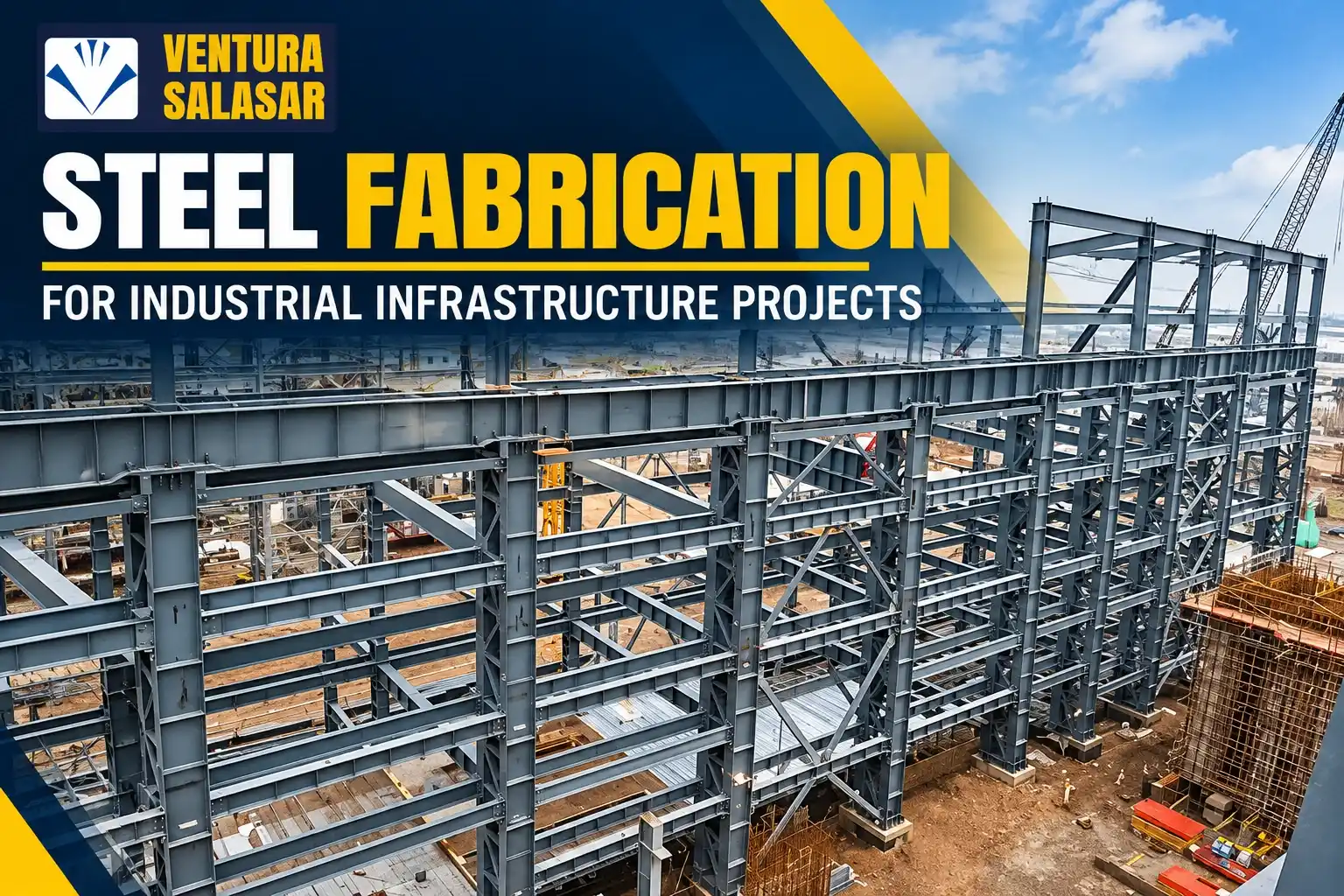
Steel fabrication for industrial infrastructure converts approved engineering information into members, assemblies and connection components that can be transported and erected safely. Reliable delivery depends on coordinated design, traceable material, controlled cutting and forming, qualified welding, dimensional inspection, surface protection, trial assembly where required, packing and complete quality records. Price per tonne alone cannot show whether a supplier has included the engineering interfaces and verification needed for the project.
Ventura Salasar presents fabricated structures, heavy steel structures and related design and protection services. Buyers should issue project drawings, specifications, loads, corrosion environment, inspection requirements and delivery constraints before requesting a comparable quotation.
Where Fabricated Steel Is Used
| Infrastructure area | Typical fabricated scope | Critical interface |
|---|---|---|
| Power and substations | Frames, supports and gantries | Equipment loads and clearances |
| Rail and transport | OHE structures, gantries and barriers | Alignment and authority approvals |
| Telecom | Monopoles, masts and equipment frames | Antenna loads and cable routes |
| Solar and renewables | Module support and equipment structures | Wind, corrosion and installation tolerance |
| Industrial plants | Platforms, pipe racks and access steel | Process, piping and maintenance access |
| Area lighting | High masts, poles and brackets | Foundation, luminaire and raising system |
The fabrication method must follow the actual duty. A repeated light bracket and a complex heavy built-up member may use similar operations but require different engineering, fixtures, welding controls, lifting plans and inspection hold points.
Begin with a Clear Design Basis
Freeze the governing drawings, design criteria, load combinations, material grades, connection philosophy, deflection limits and corrosion system before releasing production. Identify whether the fabricator provides shop detailing only, connection design, complete structural design or manufacture strictly to client drawings. Ambiguous design responsibility is a common source of delay.
Ventura lists structural designing alongside fabrication. For a live project, the proposal should name the responsible engineer, calculation scope, software or method where relevant, review stages and the party authorised to approve changes.
Shop Drawings and Detailing
Shop drawings translate design intent into member marks, dimensions, holes, welds, plates, bolts and assembly details. Each drawing needs revision control and links to the bill of materials. Fabrication should not start from preliminary information unless the commercial and technical consequences are formally accepted.
Detailers should coordinate erection sequence, access for bolting or welding, transport splits, lifting points, drainage and galvanizing vents. A connection that is structurally adequate but impossible to tighten or coat is not buildable.
Material Procurement and Traceability
| Control | Buyer evidence |
|---|---|
| Material grade | Purchase specification and certificates |
| Member identity | Heat or batch linkage and member marking |
| Substitution | Documented technical approval |
| Storage | Separation from mud, water and incompatible metals |
| Condition | Checks for damage, lamination, distortion or excessive corrosion |
| Issue to production | Cutting list and traceable transfer record |
Traceability depth should match project risk and specification. The fabricator must prevent unapproved mixing of grades and sizes. Certificates support verification but do not replace incoming inspection or dimensional checks.
Cutting Forming and Hole Making
Cutting method affects edge quality, heat input and later fit-up. Plates and sections should be cut to controlled dimensions, with required edge preparation and removal of damaging burrs. Bending and forming need suitable radii and procedures so cracking or excessive thinning is avoided.
Hole diameter, position and method must match the connection design. Field enlargement should not become the default solution for misalignment. Templates, CNC data and first-piece inspection can prevent repeated errors across a batch.
Welding Quality Control
Welding documentation should identify process, joint preparation, consumables, preheat where required, sequence and acceptance criteria. Personnel qualifications and procedures must suit the materials, thicknesses and joint types. Control distortion through fit-up, restraint and sequence rather than forcing completed assemblies into position.
Inspection may combine visual checks with specified nondestructive testing. The inspection and test plan should define hold points, sampling, acceptance and repair approval. A repaired weld needs the same disciplined examination as the original joint.
Bolted Connections and Trial Fit
Bolts, nuts and washers must match the approved grade, coating and installation method. Keep assemblies identifiable and protected from contamination. Where geometry is complex or site access is difficult, trial fit-up can verify holes, interfaces and sequence before dispatch.
Provide erection marks that remain readable after coating. Packing lists should connect loose plates and fasteners with their assembly so the site does not lose time identifying parts.
Corrosion Protection and Galvanizing
Protection should reflect the exposure, intended life, maintenance access and member geometry. Ventura offers hot dip galvanizing services, while other projects may specify painting or a combined system. The project specification governs surface preparation, thickness, appearance, repair and inspection.
Design members to drain and vent during galvanizing and in service. Closed cavities, overlapping surfaces and water traps can create safety or durability problems. Coating inspection should cover edges, welds, holes, damaged handling points and repaired areas.
Dimensional Inspection
| Check | Why it matters |
|---|---|
| Overall length and geometry | Controls erection and interface alignment |
| Hole centres and patterns | Affects bolted fit-up |
| Plate flatness and orientation | Controls bearing and connection behaviour |
| Member straightness | Affects load path and appearance |
| Base plates and anchors | Determines foundation interface |
| Assembly and camber | Confirms design intent before dispatch |
Inspection instruments should be suitable and calibrated. Record actual values where the specification requires them, not only a generic pass stamp. Resolve nonconformities through authorised disposition rather than undocumented site correction.
Fabrication for Erection and Maintenance
Good fabrication anticipates how members will be lifted, stabilised, connected and accessed. Add approved lifting features, temporary bracing interfaces and safe handling points. Coordinate walkways, ladders, equipment clearances and future removal paths before steel is released.
A maintainable structure provides access to bolts, drains, coatings and mounted equipment. Small detailing decisions can determine whether later inspection is practical.
Transport and Packing
Module size and weight should be checked against route, vehicle, crane and site access. Protect threads, machined faces and coatings; separate members to prevent rubbing. Dispatch documentation should list member marks, weights, centre-of-gravity concerns and the unloading sequence.
Transport splits must be engineered rather than improvised after fabrication. A joint introduced for vehicle limitations can change stiffness, corrosion details and erection time.
Quality Documentation Package
- Approved drawings, revision register and design submissions.
- Material certificates and traceability records.
- Welding procedures, qualifications and inspection reports.
- Dimensional, coating and nondestructive-test records.
- Nonconformance and repair closeout.
- Packing list, member marks and as-built information.
How to Compare Fabrication Quotations
Normalise steel grade, quantities, connection scope, detailing, testing, coating, packing, transport, erection support, documentation and exclusions. One bidder may include shop drawings and galvanizing while another prices bare fabrication. Compare the delivered, accepted scope—not only tonnage rate.
Ask for capacity, relevant experience, inspection plan and programme assumptions. Ventura also offers customized fabrication any custom claim should be converted into approved drawings, material schedules and acceptance criteria.
Common Project Risks
- Fabricating from unapproved or conflicting drawings.
- Substituting material without engineering review.
- Leaving erection and transport interfaces until dispatch.
- Using coating thickness as the only durability check.
- Allowing field drilling to correct repeated shop errors.
- Handing over steel without searchable quality records.
Procurement and Delivery Sequence
- Approve design basis, scope split and inspection requirements.
- Release coordinated shop drawings and bill of materials.
- Verify material and first-piece fabrication.
- Close welding, dimensional and coating inspections.
- Complete trial assembly where specified.
- Approve packing, logistics and erection sequence.
- Reconcile delivery and close final records.
Design Review Gates Before Production
Use staged reviews so procurement does not run ahead of engineering. At concept stage, confirm function, loads and interfaces. At shop-drawing stage, close dimensions, connections, materials and erection assumptions. Before production, freeze approved revisions and inspection points. Before dispatch, confirm records, packing and site readiness. Each gate should name open items and the party authorised to close them.
A review register prevents comments from disappearing in email. It should show drawing number, revision, comment, owner, due date and disposition. Fabrication against a superseded revision must trigger a controlled assessment of affected members rather than quiet rework.
Nonconformance and Repair Control
Nonconforming material, dimensions, welds or coatings should be identified and segregated. The disposition may be repair, rework, use-as-is with engineering approval, or rejection. The fabricator should not grind, heat-straighten, weld-fill holes or modify connections without an approved method when structural performance may be affected.
Closeout records should link the nonconformance to member marks, photographs, repair steps, reinspection and approval. Repeated issues deserve a corrective action that addresses drawings, fixtures, training, tools or process—not only the individual defect.
Erection Tolerances and Site Feedback
Shop accuracy and site survey accuracy must work together. Anchor positions, foundation levels and embedded items should be checked before dispatch. If the site is outside tolerance, forcing steel into position can introduce unintended stress, damage coating and distort connections.
Create a rapid technical-query process for erection. Record every approved field change on red-line drawings and feed lessons back to remaining fabrication batches. Early site feedback can prevent the same fit-up issue from reaching several later deliveries.
Programme Planning and Production Capacity
A fabrication schedule should show drawing release, material procurement, cutting, assembly, welding, inspection, coating, packing and dispatch. Critical activities and client hold points need realistic durations. A promise based only on workshop tonnage can fail if design approval, galvanizing slots or transport permits control the programme.
For phased projects, sequence members around erection zones and access. Delivering secondary pieces before primary frames creates storage and handling problems. Progress reporting should distinguish material purchased, fabricated, inspected, coated and ready for dispatch.
Safety in Fabrication and Handling
Fabrication planning should consider machine guarding, hot work, fumes, lifting, work at height, confined cavities and heavy-member stability. Lifting lugs, clamps and support stands need suitable capacity and inspection. A safe factory process also reduces damage that later becomes a structural or coating defect.
Site teams need member weights, lifting points and centre-of-gravity warnings. Temporary bracing and stability responsibility should be explicit. A completed frame may not be stable until all permanent connections and bracing are installed.
Digital Records and Member Identification
Consistent member marks connect models, drawings, cutting lists, inspection and dispatch. Barcodes or digital registers can help on large projects, but the physical mark must remain durable and positioned where it does not damage appearance or coating. Loose components need the same discipline.
A searchable handover package lets the owner trace a future defect to material, weld, coating batch and drawing. Scanned certificates without an index are difficult to use; provide a document register with filenames and member or lot references.
Lifecycle Inspection Considerations
The fabrication detail influences decades of inspection. Avoid inaccessible crevices, water traps and sealed spaces without design consideration. Provide drainage, inspection openings and replaceable attachments where the duty requires them. Coating systems should include repair guidance for erection and future maintenance.
After handover, inspect high-risk interfaces such as base plates, drainage points, bolted splices, welded attachments and areas exposed to chemicals or standing water. Feedback from service should inform later batches and similar designs.
Foundation and Anchor Coordination
Steel can be dimensionally correct yet fail to erect when anchor templates, grout levels or foundation reactions are not coordinated. Issue base-plate dimensions, hole tolerances, projection and load information early enough for civil construction. Survey anchors before steel reaches site and agree the authorised correction method.
Do not flame-cut base plates or bend anchors as an informal field fix. Any correction must preserve edge distance, bearing, thread engagement, load transfer and corrosion protection. Record the final position in as-built information.
Weather and Environmental Inputs
Industrial infrastructure may face coastal salts, chemical fumes, high temperature, dust, flooding or severe wind. Translate exposure into measurable material, coating, drainage and inspection requirements. A generic outdoor specification cannot cover every environment.
Ask how components will be protected during temporary storage and incomplete erection. Water can collect inside open members or packing, and coating damage can begin before commissioning. Temporary caps must not create hidden moisture traps.
Interface with Equipment and Services
Platforms, pipe supports, cable trays and equipment frames need coordinated loads, nozzle or anchor positions, vibration information and maintenance clearances. Fabricating from architectural geometry alone can overlook operating movement and removal routes.
Hold an interface review with structural, mechanical, electrical and operations teams. Freeze attachment points before coating where possible; uncontrolled site welding damages protection and can invalidate calculations.
Final Acceptance at Site
Final acceptance should verify member identity, geometry, connections, fastener installation, coating repairs, plumbness, levels, bracing and documentation. Agree whether checks occur by zone, milestone or complete structure. Open punches must have owners and dates.
The handover should also state residual restrictions, temporary works removed, inspection access and maintenance responsibilities. Acceptance of delivery is not the same as acceptance of installed structural work.
Frequently Asked Questions
1. What is structural steel fabrication?
It is the controlled cutting, forming, joining, inspection and protection of steel components to approved project requirements.
2. What information is needed for a quotation?
Provide drawings, quantities, grades, connections, welding, coating, testing, delivery location and programme.
3. Is fabrication rate per tonne enough for comparison?
No. Scope for detailing, testing, coating, packing and logistics can materially change total value.
4. Why are shop drawings important?
They convert design intent into buildable member and connection information.
5. What is material traceability?
It links installed members to specified grades and supporting supply records.
6. When is trial assembly useful?
It is valuable for complex geometry, repeated interfaces or difficult site access.
7. Can hole misalignment be corrected onsite?
Only through an approved engineering disposition; uncontrolled enlargement can weaken the connection.
8. Which corrosion system is best?
The choice depends on exposure, geometry, intended life, maintenance and project specification.
9. Does galvanizing eliminate maintenance?
No. Damage, interfaces and environmental exposure still require inspection.
10. What records should be handed over?
Drawings, material, welding, testing, coating, nonconformance and dispatch records.
11. How is fabrication quality verified?
Through an inspection plan covering materials, process, dimensions, welds, coating and documents.
12. How can buyers contact Ventura?
Share project drawings and scope through the company contact page for a project-specific proposal.
Convert Steel Tonnage into an Erectable Infrastructure Package
Successful fabrication is measured by safe fit-up, verified quality and predictable site assembly—not by tonnes dispatched. Review Ventura Salasar’s About Us information and send drawings, design responsibility, material grades, inspection plan, coating system, destination and schedule through the contact page to request an itemised technical and commercial proposal.




Copyright © 2023-2026 Ventura Salasar | All Rights Reserved | Website Design, Developed & Google Promotion by VRD Creative Pvt Ltd